
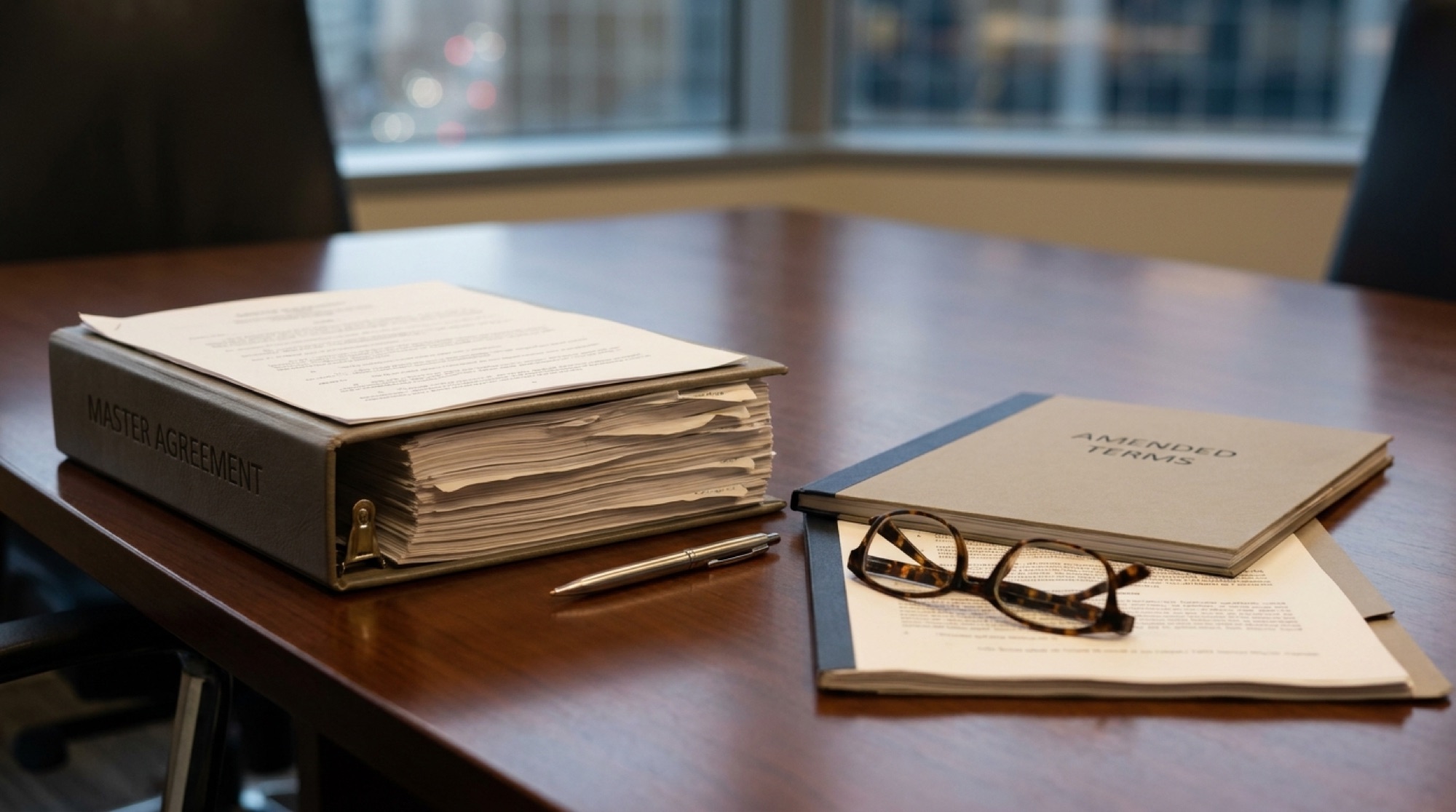
There is a clause near the front of most subcontracts that reads harmlessly enough: the subcontractor is deemed to have full knowledge of the main contract, and the subcontract obligations are to be performed on a back-to-back basis. It is one sentence. It may be the most dangerous sentence in the document. In that single line you are agreeing to be bound by a contract you have very likely never read, negotiated between two other parties, sized for the whole project rather than your slice of it. Understanding what that incorporation actually pulls onto your shoulders - and what it should not - is the difference between a priced risk and a blind one.
How Flow-Down Actually Works
Back-to-back is a drafting technique for aligning risk down the chain. The main contractor has committed to the employer to deliver the whole works on certain terms. To avoid being caught in the middle - liable upward to the employer for things it cannot recover downward from those doing the work - it flows the relevant main contract obligations down to each subcontractor. Done properly, this is legitimate and sensible: your workmanship obligations, quality standards, and programme should broadly mirror what sits above you, so that when the employer holds the main contractor to a standard, the main contractor can hold you to the same standard for your part.
Incorporation is achieved in one of two ways, and the difference matters enormously. The strong form lists specific main contract clauses and applies them expressly, so you can see exactly what you are taking on. The weak and far more common form is a sweeping statement that all main contract provisions apply to the subcontract as if repeated, with the subcontractor stepping into the main contractor's shoes toward the employer. That second form is the trap. It incorporates by reference a document you have not been given, and it does so wholesale - the reasonable and the unreasonable, the relevant and the irrelevant, all at once. The first thing to demand is the main contract itself, unpriced if commercially sensitive, because you cannot assess an obligation you are not allowed to read.
What Reasonably Flows Down
Not everything in the main contract is objectionable, and pretending otherwise makes you look unreasonable in negotiation. Certain obligations genuinely should mirror the level above. Technical specifications and quality standards should flow down - your work has to satisfy the same requirements the employer imposed, or the main contractor cannot hand over a compliant whole. Scope and workmanship obligations for your package should align. Health, safety, and site regulations should apply to you as they apply to everyone on the site. Insurance and indemnity requirements relevant to your work are reasonable. And the machinery for instructions, variations, and quality control generally needs to be consistent up and down the chain so the project runs on one set of rules rather than several conflicting ones.
The principle is proportionality. An obligation that relates to your package, that you can perform, price, and control, and that mirrors rather than exceeds what sits above, is a fair candidate for flow-down. You are, after all, doing a defined slice of a project governed by a coherent set of terms, and some alignment is the price of admission. The problem is never flow-down as such. The problem is flow-down that is disproportionate to your package or that transfers risk you have no way to price or manage - and that is where you draw the line.
What Should Not Flow Down - and Where Contractors Get Burned
Three categories deserve a hard stop, because each transfers whole-project risk onto a package-sized party. The first is liability calibrated to the entire project. A main contract cap on liability, or an uncapped exposure, is sized against the full contract value. Flow that down unmodified and your comparatively small subcontract carries a liability ceiling measured against a project many times its value - your entire margin, and then some, at risk for a single failure. Your cap should be proportionate to your subcontract, not the project.
The second is delay damages calibrated to the whole works. The main contract's liquidated damages reflect the employer's loss if the entire project is late - a daily figure that can be enormous. If that figure, or a share of it wholly out of proportion to your package, flows down to you, a delay to your works exposes you to damages that dwarf your contract value. Delay damages in your subcontract should reflect the loss your delay actually causes, not the project-wide rate. The third is programme dates and obligations you never agreed. Back-to-back drafting frequently binds you to milestones, sequencing, and completion dates lifted straight from the main programme - dates fixed before you were appointed, without reference to your resources or lead times, and sometimes already slipping when you sign. You are then in breach on day one against a programme you had no hand in setting. These three, along with the usual suspects, are exactly the terms flagged in our note on red flags in a subcontract handed down by the main contractor.
There is a further trap in pay-when-paid or conditional payment mechanics that sometimes ride in on the back of incorporation - your entitlement to be paid made contingent on the main contractor being paid by the employer for reasons that have nothing to do with your work. Whether such terms are even enforceable varies by jurisdiction, but their presence tells you how the risk has been allocated, and it is not in your favour.
How to Negotiate the Flow-Down
You do not have to accept incorporation as written, and the negotiation is more winnable than most subcontractors assume. Start by demanding the main contract. If you are being bound by it, you are entitled to read it, and a main contractor who refuses to share it while insisting you are bound by it is telling you something about the risk. Read it with your own scope in mind and identify which incorporated obligations are disproportionate to your package. Then negotiate specific carve-outs rather than trying to reject flow-down wholesale, which no main contractor will accept. Cap your liability to a figure proportionate to your subcontract value. Convert project-wide delay damages into a rate that reflects your package. Refuse programme dates you have not seen and verified against your own resourcing, and insist that your obligations run from an agreed programme rather than a snapshot of the main programme.
Push for the amendments to be express and specific, so a broad incorporation clause cannot later be read to override them. Where the incorporation language is sweeping, add a precedence provision making clear that the specific terms of your subcontract prevail over any general incorporation of the main contract. And do this before signature, not after a dispute, because once you have signed a back-to-back subcontract on the main contractor's terms, your leverage has evaporated. This is squarely preventive work - the money is made by reading and amending the document before it binds you, which is exactly what our contract prevention and review service exists to do. An hour spent on the flow-down clause before signing is worth more than any claim you will ever run after.
Frequently Asked Questions
What does back-to-back mean in a subcontract?
It means your subcontract obligations are intended to mirror the main contractor's obligations to the employer, so that risk aligns down the chain. In practice it is achieved by incorporating the main contract into your subcontract by reference, often with a clause deeming you to have full knowledge of a document you have not been shown. The purpose is to stop the main contractor being caught in the middle - liable upward for things it cannot recover downward. The danger is that it can pull whole-project obligations onto a package-sized subcontractor, unread and unpriced.
Am I really bound by a main contract I have never seen?
Potentially yes, if the incorporation clause is drafted broadly and you sign it - courts in many jurisdictions will give effect to incorporation by reference even where the subcontractor did not read the incorporated document. That is precisely why you must demand the main contract before signing. Being bound by terms you have not read is not a defence; it is the risk you accepted. If a main contractor insists you are bound by the main contract but refuses to let you see it, treat that as a serious warning sign and make disclosure a condition of proceeding.
Which obligations should not flow down to a subcontractor?
The ones calibrated to the whole project rather than your package. Chiefly: liability caps sized against the full contract value, which leave your small package carrying project-scale exposure; delay damages set at the project-wide rate, which can dwarf your subcontract value if your works slip; and programme dates lifted from the main programme that you never agreed and cannot resource. Conditional or pay-when-paid payment terms are another. These should either be excluded or re-calibrated to be proportionate to your actual scope, liability, and the loss your default would genuinely cause.
How do I negotiate a back-to-back subcontract?
First, get and read the main contract - you cannot negotiate terms you have not seen. Then identify obligations disproportionate to your package and seek specific carve-outs rather than rejecting flow-down wholesale. Cap your liability to your subcontract value, convert project-wide delay damages to a package rate, and refuse programme dates you have not verified against your resources. Make the amendments express, and add a precedence clause so your specific terms beat any general incorporation language. Do all of this before signature, because your leverage disappears the moment you sign.
What is the risk if I just sign the back-to-back subcontract as offered?
You inherit whole-project risk on a package-sized contract. You could face a liability ceiling measured against a project many times your subcontract value, delay damages at a rate designed for the entire works, and completion dates you had no part in setting and may already be behind on. You may also pick up conditional payment terms that leave you unpaid for reasons unconnected to your work. In short, you take on exposure you never priced and cannot control, and you discover the extent of it only when something goes wrong.
Back-to-back is not the enemy - blind back-to-back is, and the cure is to read the document you are being bound by before you sign it, not after it bites.
Note: This article is general information about subcontract flow-down and is not legal advice on any specific subcontract - incorporation and enforceability vary by contract and jurisdiction, so obtain tailored advice before signing.
Free tools for this topic
CALIM Contracts Desk
Contracts, Claims & Commercial Advisory
Reviewed for accuracy by CALIM's senior leadership: Dr. Varghese Koshy Panicker (Founder & CEO), Adv. Jayakumar Madapattu (Co-Founder & CLO), Tins Varghese (Co-Founder & CCSO).
This article is general information about construction contract practice, not legal advice. Entitlement, notice requirements and time bars turn on the specific wording of your contract and the governing law, which vary between projects and jurisdictions. Obtain advice tailored to your contract before acting on anything set out here.
Need help with subcontract risk?
Talk to a specialist