
Insights
Thinking from the front line.
Practical perspectives on contract management, claims defence, and the discipline that protects contractor margin. Written by the senior practitioners who live it.
Showing 64 of 64 insights

Contra Proferentem: Why Ambiguous Clauses Are Read Against the Drafter
Contra proferentem reads a genuinely ambiguous clause against the party that drafted it. Between commercial parties it is a last resort, so a contractor's real protection is a tender clarification, not a Latin tie-breaker.

DAAB Meaning: How FIDIC's Dispute Avoidance/Adjudication Board Works
DAAB stands for Dispute Avoidance/Adjudication Board, the standing dispute board in FIDIC's 2017 contracts. How it differs from the 1999 DAB, how a referral and decision work under Clause 21, who pays, and what to do when no board was appointed.

What Is an LSTK Contract? Lump Sum Turnkey Meaning and Where the Risk Sits
LSTK means Lump Sum Turnkey: one contractor, one fixed price, and a facility handed over ready to run. How it compares with EPC, EPCM and remeasurement, and which risks the contractor carries.

Managing EOT Claims on GCC Projects: From Delay Event to Determination
An extension of time claim is won by process, not paperwork. The full lifecycle of EOT claims on GCC projects: identifying the event, preserving the right, building the evidence, choosing the methodology, and managing the determination that follows.

Contemporaneous Records: Meaning, Types and What Tribunals Accept
Contemporaneous records are documents made at the time of the events they describe, and tribunals trust them over memory. What the term means in law and under FIDIC, which records decide delay and disruption claims, and how to build the system on site.

What Goes in a FIDIC Fully Detailed Claim: The 84-Day Submission Under Clause 20.2.4
The 84 days start at awareness, not at your notice. This sets out what Clause 20.2.4 requires in the fully detailed claim, why the statement of contractual basis carries its own time bar, what the Engineer must then do, and how the interim claim works when the effect is still running.

Dispute Resolution Clauses Decoded: DAB/DAAB, Arbitration and What They Mean for You
The dispute clause is the one part of a subcontract nobody reads until it is too late - and by then the forum, the seat, and the rules have already been chosen for you. Those choices decide how, where, and how expensively you can ever enforce your rights. This is the FIDIC dispute ladder in plain terms, and the five things an SME contractor should check before signing.

Handling Variations on Lump-Sum and LSTK Contracts Without Eroding Your Margin
On a lump-sum or LSTK job the price is fixed, but the scope never is - and the gap between the two is where margin quietly disappears. These forms load scope risk onto the contractor, yet genuine variations remain recoverable if you handle the mechanics with discipline. This is how to protect your number when the employer keeps asking for more.
When the Employer Calls Your Performance Bond: How to Respond
A performance bond call can drain cash you cannot spare and mark your name across a whole banking relationship - often before anyone has proved you were in default. The type of bond you signed decides how much room you have to fight. This is what separates an on-demand instrument from a conditional one, the narrow grounds to resist a call, and the moves that matter in the first forty-eight hours.

Wrongful Termination Risk - and How to Avoid Becoming the Party in Breach
Termination feels like the ultimate power move - you have had enough, you pull the trigger, you are out. But a botched termination does something you will not see coming: it flips the breach onto you. Get the grounds wrong or the procedure wrong and the party you tried to sack walks away with a repudiation claim against you. Here is how to fire without becoming the fired.

Back-to-Back Contracts Explained: What Flows Down to the Subcontractor
A back-to-back contract passes the main contract down to the subcontractor so its obligations mirror those above it. What back-to-back basis means, what flows down, where it breaks, and what to negotiate before you sign.

Disruption vs Delay: Claiming for Lost Productivity
Your programme finished on time but your labour costs blew the budget by thirty percent. That is disruption, not delay, and most contractors do not know how to claim it. Delay is about lost time on the critical path. Disruption is about lost efficiency - work that still got done, just far more expensively. Proving the second is much harder, and here is why.

Your Interim Payment Was Certified Short - Here's What to Do
You applied for QAR 4.2 million and the certificate came back at QAR 2.9 million. Before you fire off an angry email, understand what actually happened: a valuation dispute and a payment default are two different problems with two different remedies. Get the response right and you preserve the money and the relationship. Get it wrong and you forfeit both.

Can You Claim Loss of Profit and Overheads on Omitted Work?
When an employer omits scope by variation, you lose the revenue - and the profit and overhead contribution baked into it. Whether you can recover that lost margin depends on one pivotal question: is the omission genuine, or a disguised transfer of your work to someone else? Get the distinction right and a repackaged omission can become a recoverable claim rather than a silent loss.

What You Can Recover When a Contract Is Terminated
When a contract ends early, the money you walk away with depends less on what you feel you are owed and more on why the contract was terminated and how you value the wreckage. Work done, materials and plant, demobilisation, and sometimes lost profit are all in play - but the recoverable set shifts dramatically between termination for cause and termination for convenience. Here is how to build the number.

Onerous Clauses to Hunt For: Indemnities, Set-Off and Uncapped Liability
A subcontract can bankrupt an SME long before a single dispute reaches a tribunal - through three clauses that quietly transfer unlimited risk onto your balance sheet. Uncapped liability, broad indemnities, and wide set-off rights are where the real exposure hides. Here is how to find them, understand what they do, and negotiate them back to something your business and your insurer can actually survive.

Remedies for Non-Payment by a Main Contractor: Suspension and Notice Rights
When a main contractor stops paying, your instinct is to stop working - but doing so at the wrong moment can convert your valid claim into a repudiation that lets the other side terminate you. This is the escalation ladder that protects cash flow while keeping you on the right side of the contract, from the first payment notice through suspension and, as a last resort, termination.

Which Preliminaries and Time-Related Overheads Can You Recover?
A prolongation claim lives or dies on preliminaries, yet many contractors claim the wrong ones and lose the lot. Not every line in your prelims is recoverable when the job overruns - only the genuinely time-related costs, properly evidenced. This guide walks the site overheads line by line and shows which ones survive scrutiny and which do not.

What Is a Compensation Event Under NEC - and How to Manage One
NEC handles change through compensation events, and it does so on a discipline that FIDIC contractors find alien: prospective, quotation-based, and governed by strict timescales that can bar entitlement outright. Miss a notification deadline and the event can vanish. This guide explains what a compensation event is, how to manage one, and why NEC's forward-looking model rewards administration.

Valuing Variations Under FIDIC: Rates, Dayworks and Fair Value Explained
A variation is only worth what it is valued at, and under FIDIC the valuation follows rules that many SME contractors do not fully use. Apply the wrong basis and you leave money on the table on every change. This guide explains when contract rates apply, when new rates are justified, and when daywork is your friend.

How to Issue a Compliant Termination Notice Under FIDIC
Termination is the most powerful remedy in a construction contract, and the easiest to get wrong. A notice served out of sequence, without the required cure period, or under the wrong clause can flip you from the terminating party to the party in repudiation. This guide walks the procedural steps that make a FIDIC termination stick.

Pay-When-Paid and Pay-If-Paid Clauses in Construction Subcontracts
A conditional payment clause can look harmless in a subcontract until the day the employer stops paying. Then it reveals its purpose: to move the risk of the employer's insolvency off the main contractor and onto you. Pay-when-paid and pay-if-paid are not the same, their enforceability varies sharply by jurisdiction, and understanding the difference is the difference between a delayed payment and a lost one.

How to Calculate Prolongation Costs: Hudson, Emden and the Actual-Cost Approach
Winning the extension of time is only half the battle. The other half is proving what the delay actually cost you, and that is where most prolongation claims fall apart. The formula methods - Hudson, Emden, Eichleay - are famous, but tribunals increasingly want to see real money, not a mathematical estimate. This is how prolongation cost is quantified, and why substantiation beats a formula almost every time.
How to Review a Construction Subcontract Before You Sign: A Practitioner's Checklist
The riskiest hour in a subcontract's life is the hour before you sign it. That is the only moment you have leverage, and most SME subcontractors spend it reading the price and skimming the rest. This is a commercial review checklist in the order a practitioner actually works through it - the clauses that decide whether the job makes money or quietly bleeds it.

How to Notify a Variation Under FIDIC (Red & Yellow Book): The Notice Mechanics That Protect Your Entitlement
On a FIDIC project the difference between a paid variation and an unpaid one is rarely the engineering. It is the paperwork. Get the notice mechanics right and a change to scope becomes a valued, certified addition to your account. Get them wrong and the same work becomes free. This is how the Clause 13 machinery actually works, and how to keep your entitlement alive on a live job.

Concurrent Delay: How It Affects Your Time and Money Entitlement
Concurrent delay is the most misunderstood concept in construction claims, and the confusion is expensive. Two delays run at the same time - one the employer's risk, one yours - and the instinctive assumption is that they cancel out. They do not. In most cases you may still be entitled to the time, while the money is refused. Understanding why time and cost part company is the difference between a claim that survives and one that collapses.

Missed the Variation Notice Deadline? What Time Bars Really Mean for Your Claim
A time bar does not care whether your claim was right. It cares whether your notice was on time. Miss the deadline in a condition-precedent notice regime and a fully valid entitlement to extra time or money can be extinguished before it is ever assessed on its merits. Understanding how time bars work, and how tribunals enforce them, is the difference between a claim that is heard and one that is dead on arrival.

Termination for Cause vs Termination for Convenience: Know Which One You're In
The two terminations look similar on the page and could not be more different in the bank account. Termination for cause is a remedy for breach and puts the defaulting party on the hook. Termination for convenience is a no-fault exit that costs the employer money. Confuse the two, or invoke the wrong one, and a lawful exit becomes a repudiatory breach that flips the liability onto you.
Red Flags in a Subcontract Handed Down by the Main Contractor
The subcontract you are handed was not drafted to be fair. It was drafted to move risk down the chain, off the main contractor's balance sheet and onto yours. The dangerous clauses are predictable: back-to-back flow-down, conditional payment, uncapped liability, wide set-off, and liquidated damages with no matching route to extra time. Knowing where they hide is the difference between a profitable job and a signed-away margin.

NEC vs FIDIC: Which Contract Suite, When and Why
NEC and FIDIC are not interchangeable. They embody fundamentally different philosophies of risk, communication, and dispute management. A comparative analysis of contract suite selection criteria across jurisdictions, project types, and procurement strategies.

Delay Analysis Methods Explained: Time Impact vs As-Planned vs As-Built
A practical comparison of the five delay analysis methods in common use: as-planned vs as-built, impacted as-planned, time impact analysis, windows analysis and collapsed as-built. What each one proves, the records it needs, how tribunals weigh it under the SCL Protocol, and how to choose the method your evidence can support.

Common Mistakes Contractors Make Managing NEC Contracts
NEC contracts punish weak administration harder than any other standard form. The early warning register, compensation event timelines, and programme acceptance provisions create a procedural architecture where a single missed step forfeits entitlement entirely. A clause-level examination of the most common NEC contract mistakes and why FIDIC-trained contractors fail under NEC.

Retention: How Holdback Works and How to Actually Get It Back
Retention is the money you earned, the employer kept, and nobody chased. The retention release mechanism under FIDIC is straightforward on paper and consistently mismanaged in practice. A practical playbook for recovering the second half before it quietly becomes a permanent deduction.

Preventing Disputes Over Variation Valuation Before They Start
Most variation disputes are not born at the valuation stage. They are born months earlier, when nobody agreed on rates, nobody kept records, and nobody maintained the register. Variation dispute prevention is a discipline, not a reaction.

What Is a Prolongation Claim - and What Actually Qualifies?
A prolongation claim recovers the time-related cost of remaining on site during a compensable delay. Yet most submissions fail not on the merits of the delay, but on the structure of the entitlement argument. A breakdown of what qualifies, what does not, and the three-part test every prolongation claim must satisfy.

What Does Outsourced Contract Administration Cost - and What's the ROI?
Contract administration cost is governed by three variables: scope, seniority, and structure. Most contractors evaluate the retainer in isolation. The more revealing comparison is the retainer measured against the cost of a single undefended claim, a forfeited variation, or an LD deduction that proper administration would have prevented.

Remeasurement Contract vs Lump Sum (Fixed Price) vs Cost-Reimbursable: Choosing Your Risk
A remeasurement contract pays tendered rates for the quantities actually built. Here is how it compares with lump sum and cost-reimbursable pricing, and who carries each risk.

Excusable, Compensable, Non-Excusable: A Contractor's Map of Delay Types
Most delay discussions collapse three distinct categories into one. A compensable delay entitles the contractor to both time and money. An excusable delay grants time only. A non-excusable delay grants neither. Knowing which category applies before you draft the notice changes everything.

NEC3 vs NEC4: The Differences That Matter to Contractors
The NEC4 suite introduced structural changes to early warnings, compensation events, and dispute resolution that alter how contractors administer their obligations. A clause-level comparison of NEC3 vs NEC4, with attention to international adoption patterns across the UK, GCC, and Asia Pacific.

Interim Payment Certificates Explained: The Monthly Valuation Cycle Every Contractor Should Master
The interim payment certificate is the single most important document in a contractor's monthly cash flow cycle. Yet most contractors treat it as a formality rather than a commercial instrument. A practical breakdown of the IPC cycle, from application to certification to payment, and the points where money quietly disappears.

EOT vs Prolongation: Why They're Not the Same Claim (and Why It Matters to Your Cash)
Winning an extension of time does not automatically recover the cost of staying on site longer. EOT vs prolongation: two distinct claims, two separate entitlements, and a gap that costs contractors real money when only the time relief is pursued.

Change Order vs Variation vs Compensation Event: A Contractor's Plain-English Guide
A change order and a variation order do the same job under different contract families. This guide sets both against the NEC compensation event: who triggers the change, when it is priced, how time is assessed and which notices can kill it.

When Does a Contractor Actually Need a Contracts Manager?
Most contractors do not ask whether they need a contracts manager until something has already gone wrong. Here are the five project triggers that signal when dedicated commercial management stops being optional and starts being cheaper than the alternative.

Claims Consultant vs Lawyer: Who Do You Need, and When?
A claims consultant and a construction lawyer serve two different stages of the same dispute. Calling the wrong one at the wrong time either inflates costs or undermines entitlements. A stage-based decision framework for contractors.

In-House Commercial Team vs Outsourced Contract Administration: The Real Cost
Most contractors cost their commercial function by adding up salaries. Basic pay is 55 to 65 percent of the real number. A two-person in-house team runs QAR 85,000 to QAR 120,000 a month fully loaded and never flexes, against a senior-led retainer at QAR 25,000 to QAR 55,000. The full arithmetic, and when building in-house finally pays.

Confidentiality in Contract Advisory: Why Your Data Is Safer with an External Specialist
Contractors guard their contractual data fiercely - and they should. But the real question is not whether an external advisor will see sensitive information. It is whether you have the governance framework to protect it. Here is why engaging a specialist actually strengthens your data security posture.

When the Contract Is Non-Negotiable, the Administration Has to Be Bulletproof
Many contractors operate under contracts they had no power to negotiate. The terms are fixed, the risk allocation is skewed, and the margin for error is zero. In that environment, the only lever left is flawless administration - and most contractors are not pulling it.

The Revenue You Do Not Know You Are Losing: Why 'No Challenges' Is the Most Expensive Assumption
When a contractor says they have no challenges, it usually means they have not looked. Invisible revenue leakage - uncaptured variations, unnotified delays, understated payment applications - costs the average contractor 3-5% of top-line revenue. Here is where the money goes.

Strategic Contract Negotiation: The Technique of Achieving Favorable Terms While Preserving Professional Relationships
Preparation is not merely important - it is fundamental to achieving favorable outcomes. A framework for effective contract negotiation covering anchoring strategy, concession timing, information management, and documentation control.

When a Notice Becomes a Handshake: The Lost Art of Contract Communication
Contractual notices in construction and engineering should prioritise collaborative communication over adversarial positioning. A notice is an early warning system, not a punitive tool. Tone dramatically affects outcomes.

Are You Signing a Project or a Contract?
In construction, 98% of megaprojects face cost overruns or delays. In IT, fewer than 35% of projects are delivered on time and within budget. Business leaders focus on project execution but overlook the contract that protects the value created.

Mutatis Mutandis Meaning: What It Does in a Contract, With Clause Examples
Mutatis mutandis means the necessary changes having been made. One Latin phrase can carry a payment or dispute clause across parties, phases and jurisdictions, and it only works if everyone agrees what the necessary changes are.

The Law Does Not Compel the Impossible
Lex non cogit ad impossibilia - the law does not compel the impossible. A Roman maxim that still protects parties from liability when performance is objectively impossible, guides judicial interpretation, and shapes how modern contracts handle frustration and force majeure.

Why 80% of LD Claims Originate in Administration, Not Drafting
The most expensive contract failures are not born in the legal review. They are born in the daily administration - missed notices, expired time bars, and undocumented variations. A breakdown of the patterns CALIM sees across engagements.

The Four Lenses Framework: A Practical Guide for Contractors
Most contractors review contracts through a single lens - Legal. Here is why that is one quarter of the picture, and how the Four Lenses Framework closes the gaps that cost margin.

Variation Capture: The Discipline That Pays for Itself
Variations are where contractors either recover value or quietly surrender it. A practical guide to building the capture discipline that turns scope changes into approved entitlements.
Your Contract Is a Meter. Are You Reading It?
Most SME contractors blame the project when margins go missing. Wrong place to look. In most engagements we take on, the money is leaving through the contract, not the site. Unbilled variations. Unrecovered preliminaries. Retention sitting in client accounts past its release date.

The 28-Day Rule That Kills More Claims Than Any Dispute
28 days to notify. Day 29, the claim is contractually dead. Clause 20.1 of FIDIC has cost GCC contractors more entitlement than any single dispute, variation, or delay event we have ever seen. Not because the claims were not valid. Because the notice was not filed.
FIDIC 2017 vs. FIDIC 1999: What Contractors Need to Know
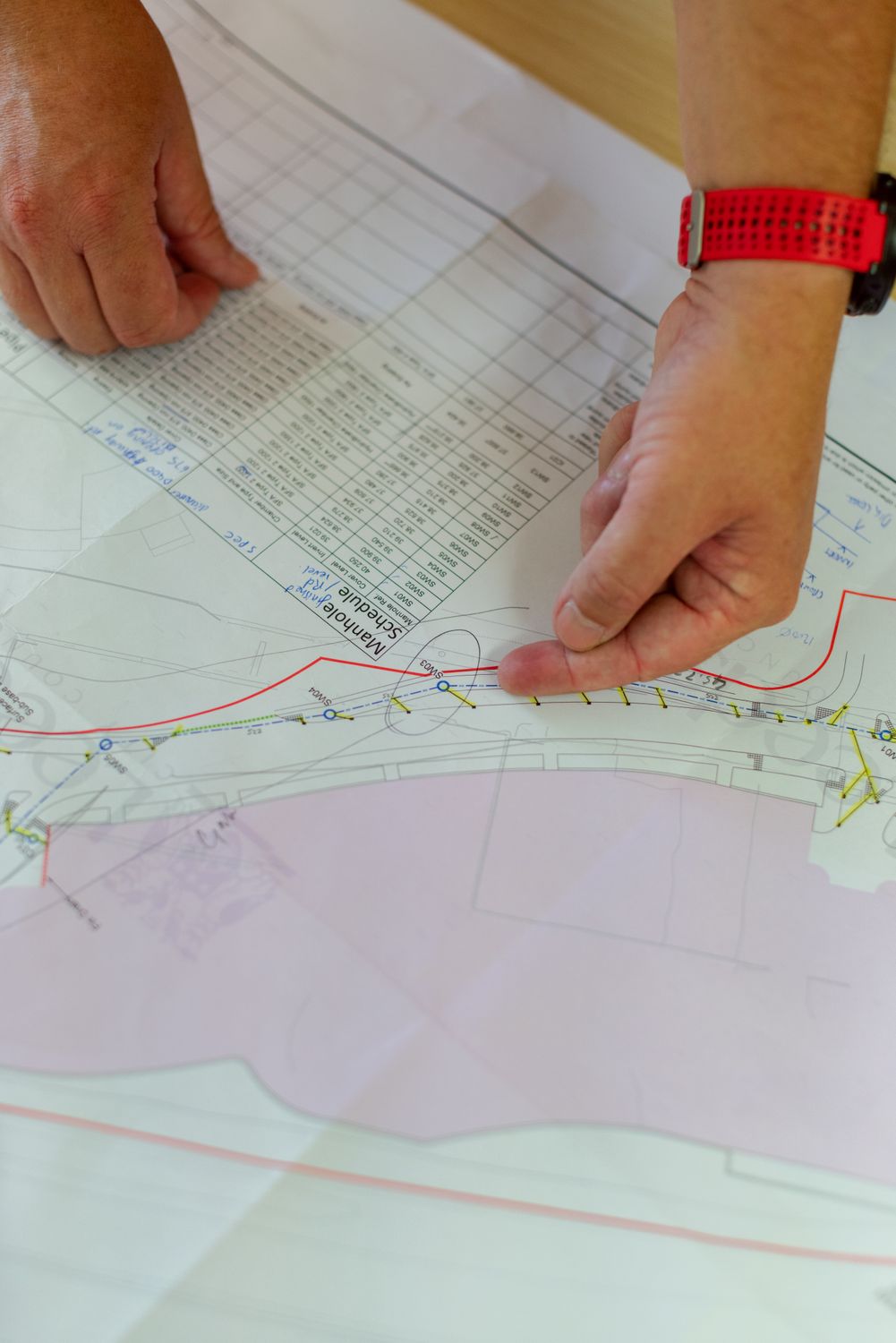
The 2017 FIDIC suite introduced significant changes to claims procedures, dispute resolution, and employer obligations. A comparison guide for contractors transitioning between editions.

The Cost of a Messy Close-Out: Lessons from 50+ Projects
Close-out is where contractors leave the most money on the table. Based on CALIM’s engagement data, a look at the most common close-out failures and how to prevent them.
Why Do So Many EOT Claims Get Rejected?
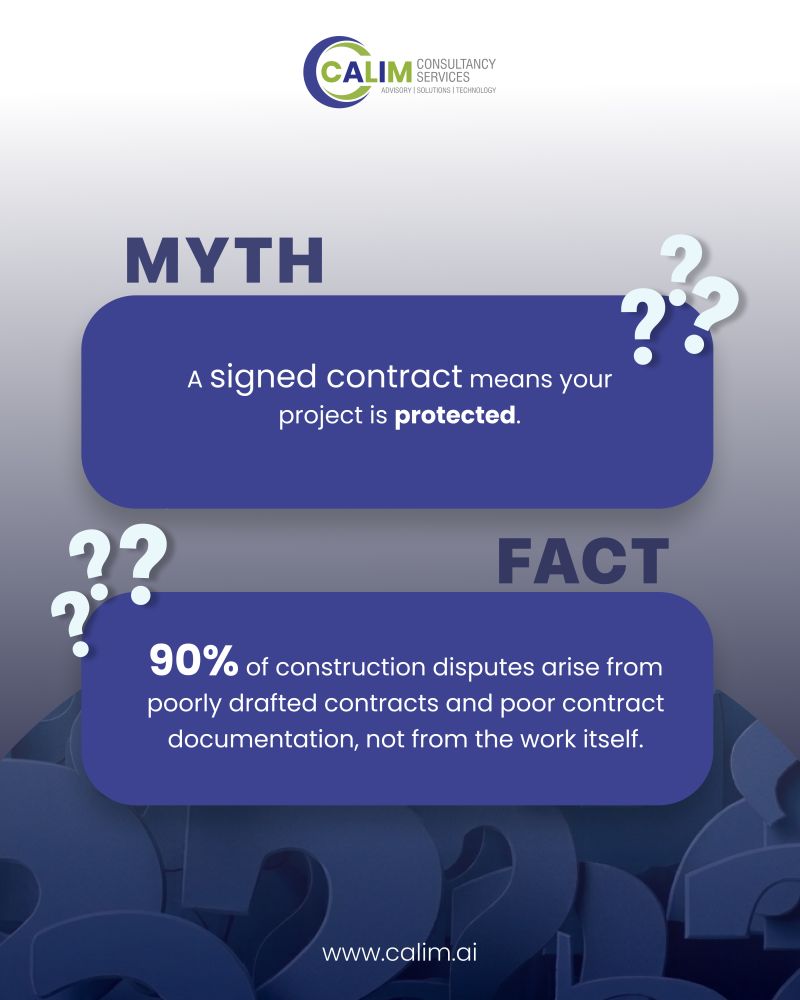
We review hundreds of Extension of Time claims across the GCC every year. The delays are real. The costs are legitimate. The impact is measurable. But the claim still gets rejected. Late notification, weak cause-and-effect linkage, insufficient contemporaneous records, wrong methodology, and poor documentation quality.

Signing a Contract Feels Like Protection. It Is Not.
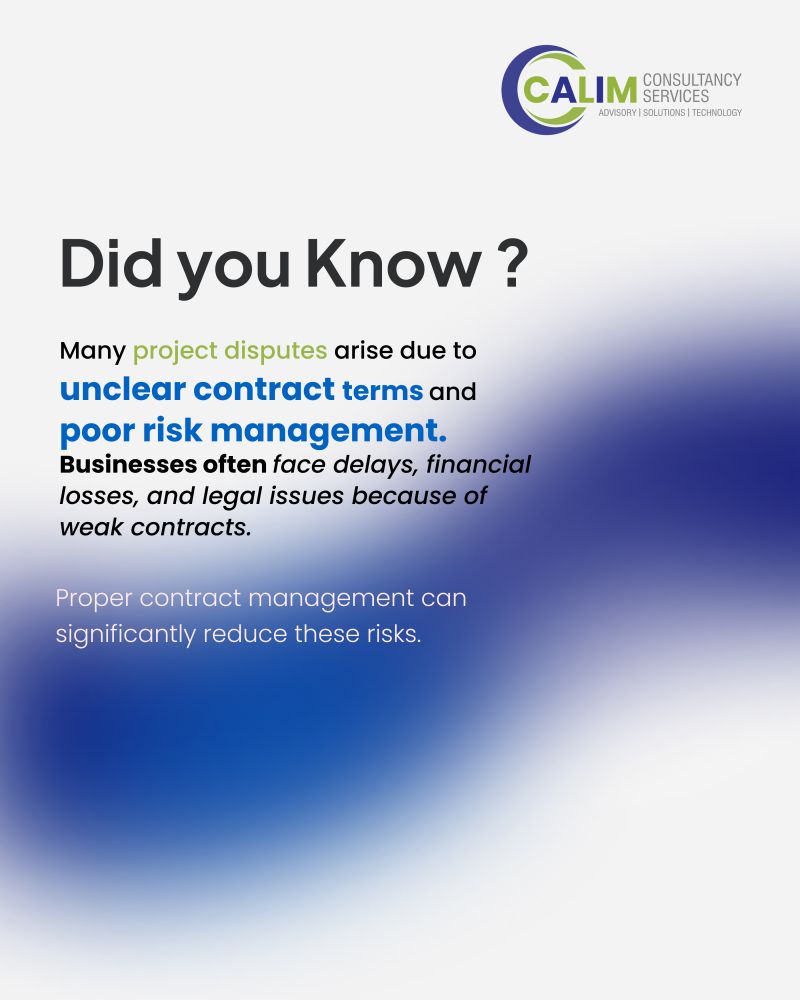
90% of construction disputes trace back to poorly drafted contracts and inadequate contract documentation. The risk was embedded long before the first milestone was missed or the first claim was filed. We review, strengthen, and manage contracts so projects are protected from the start.
Most Project Disputes Start in the Contract, Not on Site
Vague scope. Unclear notice requirements. Risk allocated to the party least able to manage it. By the time the problem shows up on site, the damage is already baked into the contract. Proper contract administration catches these issues before they cost you months and millions.

One Firm. Five Markets. Local Knowledge at Every Table.
Contracts do not follow one set of rules. They follow the rules of wherever the project sits. CALIM operates across Qatar, KSA, UAE, India, and the USA with teams who understand the local regulatory landscape, not just the FIDIC clause numbers.
Stay Informed
Get the Four Lenses Guide.
A plain-English playbook from our senior specialists. How to spot exposure early, build claims that get paid, and defend LDs without burning the relationship.
Request the guide →Get Started
Have a question our articles do not answer?
The fastest answer is usually a 30-minute call with one of our senior specialists.
Which topic matters most to your business right now?
Select one to help us match you with the right specialist.